The Overhead Witness: What the Cameras Above Self-Checkout Are Really Counting
The Lane as a Sensor Array
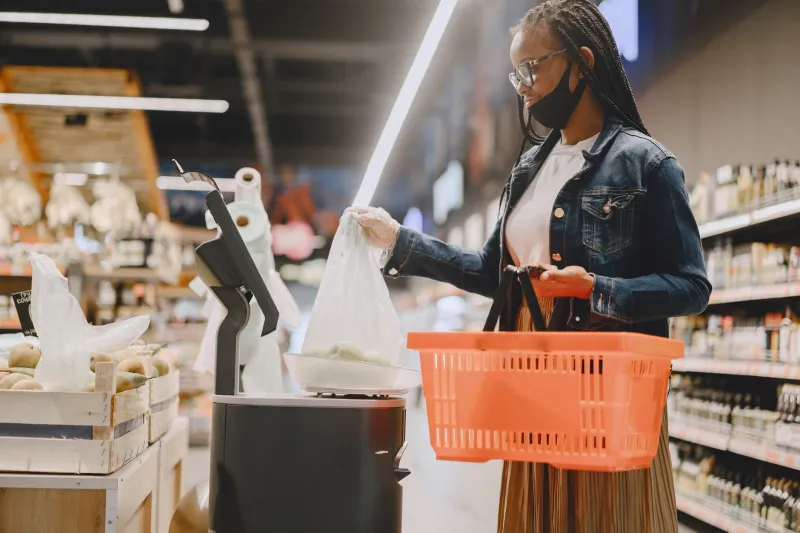
The self-checkout lane looks like a simple substitution: you scan, you bag, you pay, and the cashier's job disappears. Above the scanner, however, the lane is doing something else. It is collecting signals. A scale weighs the bagging area. The scanner reads barcodes. Cameras watch the produce shelf, the belt, the bagging area, and sometimes the shopper's hands. Software compares what it sees with what the transaction says should be happening.
In 2026, many US grocery and mass-market chains use some combination of these systems. The exact configuration varies by retailer and by store. Some lanes rely on weight checks and a single overhead camera. Others use computer-vision models trained to recognize produce, track items from basket to bag, and flag scan gaps. The system is not usually making a single judgment. It is producing a stream of probabilities: this object looks like an avocado; this hand moved an item past the scanner without a beep; this bag weight does not match the scanned item; this transaction has an unusual sequence.
From Produce to Probable Intent
Produce recognition is one of the most visible uses. A shopper places a loose avocado, a bunch of bananas, or a head of lettuce on the scale. A camera captures an image, and a model classifies it against a library of fruits and vegetables. The lane may ask the shopper to confirm the item, or it may assign a code automatically. The purpose is speed, but the same image can become a data point. If the model is uncertain, the shopper gets a prompt. If the model is wrong, the receipt may show the wrong price or the wrong item.
Loss-prevention systems use a different logic. They look for sequences that suggest an item was not scanned: a hand crossing the scanner without a barcode beep, an item placed directly into a bag, a weight change that does not match the scanned product, or multiple items moved after a single scan. Some systems also flag 'sweethearting,' where an employee or friend passes items without charging. The lane cannot read intent. It can only compare observed motion and weight against expected patterns. That difference matters, because the same alert can be triggered by a mis-scanned coupon, a bagging error, a child helping with groceries, or a deliberate skip.
The Blur Between Error and Theft
Retailers often describe these systems as accuracy tools. They help catch mistakes and reduce shrink, the industry term for lost inventory. But the same signal can be routed to loss prevention. A weight mismatch may prompt a polite attendant to check a receipt. A repeated pattern may lead to a review of video. The shopper experiences a single event: the lane freezes, a light flashes, and someone asks to see the bag. The system experiences a data point that may be stored, scored, and compared with other transactions.
That blur is the core issue. An error is not a theft, and a flag is not a finding. Computer-vision models have false positives. Produce can be misclassified. A bag can settle after being placed. A shopper can scan an item and then move it to a different bag. The system's confidence score is not a moral judgment, but it can feel like one when an attendant arrives. The reasonable question is not whether the lane sees everything. It is what the store does with what the lane sees.
What the System Remembers
Data retention is set by the retailer and by state law, and it varies. Transaction logs may be linked to a loyalty account, a payment card, or a receipt. Video may be kept for days, weeks, or longer depending on policy and incident review. Some systems store short clips around an alert rather than continuous footage. Others keep more. The shopper is rarely told which. A store that uses facial recognition is a different category of system, and not every self-checkout lane does. But the presence of cameras alone means that a transaction can become a recorded event.
The practical response is not to assume the worst. It is to understand the lane as a measurement device. The camera above the scanner is counting items, scans, weights, and deviations. It is also counting you as a data point in a loss-prevention model. That model may be accurate, inaccurate, or both. Your leverage is limited, but it is not zero.
A Reasonable Response
If a lane flags you, stay calm and ask for the specific issue. Keep your receipt. If the system misidentified produce, ask for a manual correction. If a weight error repeats, use a staffed lane for that order. If you are uncomfortable with the camera, choose a cashier when one is available. If you use a loyalty account, remember that the transaction can be linked to it. None of these steps defeat the system. They simply reduce the chance that a machine's uncertainty becomes your problem.
The self-checkout gaze is not a single camera watching a single shopper. It is a small intelligence system built to compare what you do with what the receipt says. Most of the time, it works quietly. When it does not, the shopper discovers that the lane was never just a scanner. It was a witness with a scale.