Visible Secrets: The Deliberate Cryptography Embedded in Modern Brand Visual Identity

Photo: The original uploader was Wilinckx at Dutch Wikipedia., Public domain, via Wikimedia Commons
A logo is, on its surface, a mark of recognition. It tells you who made the product, who owns the storefront, whose name appears on the invoice. This functional reading, however, accounts for only the outermost layer of what sophisticated brand designers actually construct. Beneath the immediately legible surface of the most carefully engineered brand identities in American commerce lies a secondary vocabulary — a system of encoded references, embedded geometries, and deliberate ambiguities that function as insider communication between the brand and its most attentive audience.
This is not accidental complexity. It is intentional cryptography, executed in plain sight.
The Hidden Arrow That Launched a Thousand Design Lectures
No examination of embedded brand symbolism can proceed without acknowledging the FedEx wordmark, designed by Lindon Leader in 1994 and still in continuous use. The negative space between the capital E and the lowercase x in the logotype forms a precise rightward-pointing arrow — a visual metaphor for forward motion and delivery efficiency that the company did not publicize for years after the logo's introduction. Once seen, it cannot be unseen.
What makes the FedEx arrow instructive is not merely its cleverness but its structural logic. The hidden element reinforces the brand's core operational identity in a way that rewards careful observation. Customers who discover the arrow independently tend to report a sense of private discovery — a feeling of having been let in on something. This psychological mechanism is central to how embedded brand symbolism functions: it creates a secondary tier of brand loyalty among those who take the time to look more carefully than the casual observer.
Numerical Encoding and the Language of Founding Dates
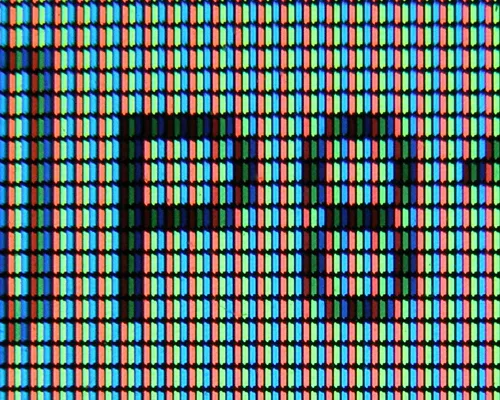
Several prominent American brands embed historical or numerical references into their visual systems with a subtlety that the general public rarely registers. Baskin-Robbins, the ice cream chain founded in 1945, incorporates the number 31 — representing the brand's original count of flavors — into the letters B and R of its logo, rendered in a contrasting pink. The numeral is structurally present within the letterforms themselves, visible to those who know to look for it and effectively invisible to those who do not.
This technique of numerical concealment extends into the digital era. Several technology companies have embedded version numbers, founding year references, or product launch dates into the proportional systems of their iconography. The practice is particularly common in the craft beverage and premium consumer goods sectors, where heritage and origin narratives carry significant commercial value and where the discovery of a hidden date functions as a form of brand storytelling.
Typographic Misdirection and the Starbucks Siren
The Starbucks logo presents a different category of embedded meaning — one rooted not in geometric concealment but in iconographic layering. The central figure of the twin-tailed siren, derived from a 16th-century Norse woodcut, carries a dense web of maritime mythology, classical allegory, and deliberate ambiguity about the precise nature of the creature depicted. Over successive redesigns, the figure has been progressively cropped and abstracted, with explicit anatomical details obscured — a process that has, paradoxically, increased rather than diminished the symbolic charge of the image.
Design historians have noted that the ongoing refinement of the Starbucks siren represents a form of managed mystery: the brand retains the mythological resonance of the original source material while ensuring that the surface presentation remains commercially palatable. The encoded meaning is not hidden so much as it is deferred — available to those who research the iconographic lineage, invisible to those who simply want coffee.
Color as Cipher: The Tiffany Blue Problem
Color systems represent one of the most underappreciated dimensions of brand cryptography. Tiffany & Co.'s trademarked robin's-egg blue — Pantone 1837, a designation that itself encodes the company's founding year — functions as a complete communication system requiring no accompanying text. The color alone triggers a specific constellation of associations: luxury, occasion, romantic gift-giving, American heritage. This is not accidental conditioning but the result of over a century of deliberate color-meaning engineering.
More recently, brands operating in the technology and direct-to-consumer sectors have begun employing what designers call "signal colors" — specific hues chosen not for their aesthetic properties but for their capacity to encode brand values through cultural association. The particular shade of green employed by Whole Foods Market, for instance, is calibrated to activate associations with environmental responsibility and natural provenance. The orange of Home Depot communicates accessibility and industrial pragmatism. These are not merely aesthetic choices; they are semantic ones, encoding meaning through chromatic shorthand.
Easter Eggs as Loyalty Infrastructure
The practice of embedding Easter eggs — hidden references discoverable only through careful attention — has migrated from software culture into mainstream brand identity with increasing frequency. Pixar, a studio whose visual identity is inseparable from its content, has built an entire mythology around the recurring appearance of the code A113 (a reference to a classroom at CalArts attended by many of the studio's founding animators) and the Pizza Planet truck across its film catalog. These hidden consistencies function as a reward system for devoted audiences, creating the conditions for a secondary engagement layer that operates entirely apart from the primary narrative.
In the fashion sector, several luxury houses embed archival references into seasonal collections in ways that are legible only to those with deep knowledge of the brand's history. A particular topstitching pattern, a specific button count, a lining color that matches a historic runway piece — these details communicate directly to a subcultural audience that has done the work of learning the brand's internal language.
The Ethics of Encoded Branding
Not all embedded brand symbolism operates with benign intent. Critics of the practice have raised legitimate questions about the use of visual encoding to obscure corporate relationships, ownership structures, or product origins. The proliferation of sub-brands that deliberately conceal their parent company affiliation — a practice widespread in the organic and natural foods industry — represents a form of cryptographic deception rather than cryptographic celebration.
The distinction between embedded meaning that rewards attention and embedded meaning that exploits inattention is a meaningful one, and it is a distinction that the most ethically sophisticated brand practitioners actively maintain. The former builds genuine loyalty through genuine discovery. The latter exploits the same psychological mechanisms for misdirection.
Reading the Grid
For the observant American consumer, brand visual identity constitutes a continuously available text — one that yields considerably more information to the attentive reader than to the casual glancer. The arrows, numbers, historical references, and chromatic codes embedded in the brand systems that surround daily life are not decorative flourishes. They are deliberate communications, addressed to those who have developed the capacity to receive them.
The discipline of reading these signals — of decoding what others miss — is precisely the disposition that distinguishes the informed observer from the passive consumer. The cipher is always present. The question is simply whether you have learned to read it.