Pixels with Secrets: Understanding the Art and Science of Hidden Data in Digital Media
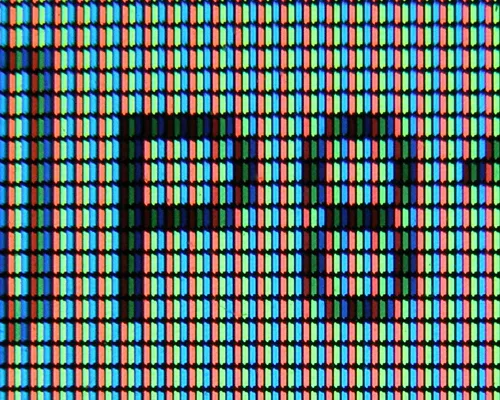
Photo: Kprateek88, CC BY-SA 4.0, via Wikimedia Commons
There is a category of information that exists in plain sight and yet remains effectively invisible to the overwhelming majority of people who encounter it. It does not require a cipher key to overlook, nor does it demand specialized training to miss. It simply hides inside the ordinary—inside the image files that populate your news feed, inside the audio tracks of podcasts downloaded to your phone, inside the seemingly routine PDF that arrived in your inbox this morning. This is the domain of steganography, and in 2024, it has become one of the most consequential and least discussed dimensions of digital media literacy.
An Ancient Practice, A Modern Medium
The word steganography derives from the Greek for "covered writing," and the practice predates digital technology by millennia. Ancient Greek historians documented the use of messages tattooed on shaved heads, then concealed beneath regrown hair. Renaissance-era scholars developed methods of embedding text within the spacing and formatting of printed documents. During the Second World War, microdots—photographs reduced to the size of a typographical period—were used to conceal entire pages of intelligence within ordinary correspondence.
What the digital revolution provided was not a new concept but an exponentially expanded canvas. A standard 24-bit color digital image contains three channels of color data per pixel—red, green, and blue—each represented by a value between 0 and 255. Altering the least significant bit of each channel across thousands of pixels produces changes that are mathematically present but perceptually undetectable. The human visual system cannot distinguish between a pixel with a red value of 200 and one with a red value of 201. Within that imperceptible margin, information can be encoded at significant density.
A high-resolution photograph measuring 3000 by 4000 pixels contains 12 million pixels. Encoding one bit of hidden data per pixel across all three color channels yields a storage capacity of approximately 4.5 megabytes—enough to conceal a substantial text document, a compressed file, or a secondary image within what appears to the casual observer to be an unexceptional landscape photograph.
Corporate Steganography: The Watermark Economy
For most Americans, the most routine encounter with digital steganography occurs not in shadowed corners of the internet but in the entirely mainstream context of digital content licensing. Corporate watermarking—the embedding of invisible ownership and licensing data within commercial images, video content, and audio files—represents one of the largest-scale deployments of steganographic technique in existence.
Getty Images, Shutterstock, and similar stock media agencies embed imperceptible identifier codes within every file they distribute. These codes survive common transformations: image resizing, format conversion, moderate JPEG compression, and even screenshot capture. When an image is used without authorization, the embedded code allows the rights holder to identify the specific licensed copy from which the unauthorized derivative was made and, in many cases, to determine the original licensee.
Similarly, major streaming platforms including Netflix and Disney+ employ a practice known as "forensic watermarking" in their video delivery systems. Individual streams delivered to specific subscriber accounts contain unique, imperceptible variations in pixel timing and color values that allow the platform to trace the origin of any leaked recording. This is not speculative—it is the mechanism by which several high-profile pre-release leaks have been traced to specific screening attendees or internal employees.
The point is not that these practices are sinister. In the context of intellectual property management, they represent a legitimate and technically sophisticated application of the same underlying principles. The significance lies in what they reveal: steganographic encoding is already woven into the fabric of mainstream digital media consumption, largely without the knowledge of the people consuming it.
Underground Channels: Steganography Beyond the Mainstream
Beyond the corporate watermark economy, steganography serves a considerably more varied range of purposes. Security researchers, privacy advocates, and investigative journalists have long used steganographic tools to transmit sensitive information through channels that would not flag traditional content-based surveillance systems. An image file passing through an email server does not trigger keyword filters. Its contents, if encoded steganographically, are effectively invisible to automated scanning.
This utility has made steganography a documented tool in the operational repertoire of both legitimate whistleblower networks and, more troublingly, criminal organizations. Law enforcement agencies including the FBI have documented cases in which steganographically encoded images posted to public social media platforms were used as dead-drop communication mechanisms—a modern iteration of a technique with deep roots in intelligence tradecraft. The platform's own moderation systems, focused on visible content, had no mechanism to detect the embedded payload.
The same technique has been documented in malware distribution. Certain categories of malicious software extract their operational code from image files that appear entirely benign to security scanning tools focused on executable file types. The image serves as a carrier; the steganographically embedded data contains the actual threat.
Developing Your Own Detection Literacy
For readers who wish to move from passive awareness to active understanding, several accessible entry points exist.
Steganalysis tools are freely available and require no advanced technical background to operate at a basic level. Applications such as StegExpose and Stegdetect analyze image files for statistical anomalies that are characteristic of common steganographic encoding methods. They will not catch every technique, but they provide a meaningful first layer of detection capability for files of interest.
Metadata examination is a related and equally accessible practice. Every digital file contains metadata—embedded information about the file's creation date, the device used to create it, GPS coordinates in the case of photographs, and software version information. Tools such as ExifTool, available as a free download, expose this metadata layer in full. Discrepancies between stated and embedded metadata can indicate file manipulation, though not necessarily steganographic encoding specifically.
Visual noise analysis can reveal crude steganographic encoding to the trained eye. When viewed through image analysis software that amplifies subtle color variations, images containing least-significant-bit encoding often display a characteristic uniform noise pattern in regions of otherwise smooth color gradients. This is not detectable in normal viewing but becomes apparent under specific display filters available in free tools like GIMP or ImageJ.
File size anomalies represent a simpler heuristic. An image file that is substantially larger than expected for its dimensions and format may contain additional embedded data. While this is not definitive—compression settings vary considerably—it is a reasonable flag for further investigation.
Why This Knowledge Matters Now
The case for steganographic literacy in 2024 is not rooted in paranoia. It is rooted in the recognition that digital media is not simply what it appears to be on the surface. The files that circulate through American digital life—the memes, the news photographs, the downloaded documents—exist within a technical substrate that is capable of carrying invisible information, and that capability is actively exploited by actors ranging from major corporations to intelligence services to criminal networks.
Media literacy has always demanded that citizens look beyond the surface of the information they consume. In the digital age, that imperative has acquired a literal dimension. The message is sometimes in the pixels. Knowing how to look for it is increasingly part of what it means to be an informed participant in contemporary information culture.