Measured and Misread: The Statistical Prejudice Hardwired Into Biometric Identity Systems
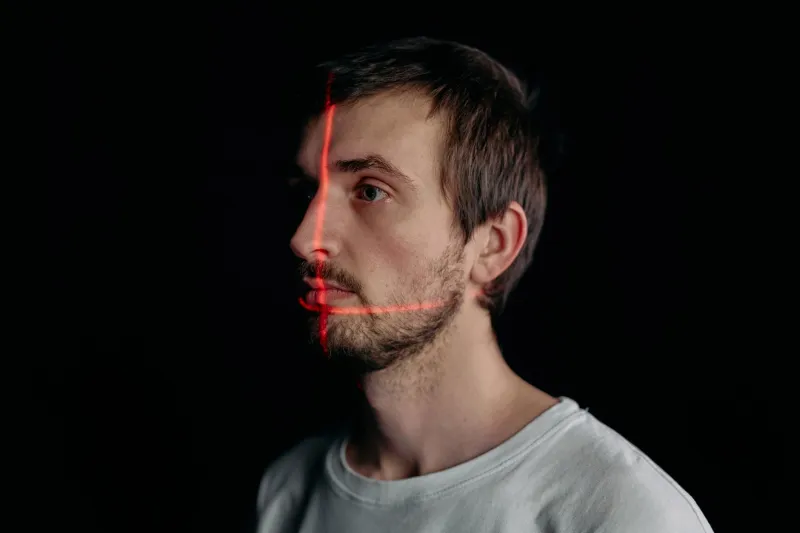
There is a particular kind of authority that numbers confer. When a system produces a percentage — a confidence score, a match probability, a verification threshold — the human tendency is to accept it as fact rather than interpretation. Biometric identity systems have exploited that tendency with remarkable efficiency. They present the face as a mathematical object, something reducible to vectors and distances, and they present themselves as the impartial instruments that read it. What they conceal is the origin of their own calibration — the choices, data sets, and assumptions that were baked into them long before your face ever appeared on a sensor.
The consequences of that concealment are not abstract. Across the United States, biometric verification systems are now embedded in the infrastructure of daily life: unlocking smartphones, authorizing financial transactions, processing employment background checks, verifying identity at airport security, and gatekeeping access to government benefits. Every one of those encounters produces an outcome — matched or unmatched, verified or flagged — and those outcomes are treated as objective determinations. For a significant portion of the population, the determinations are wrong more often than the system's architects publicly acknowledge.
The Architecture of a Biased Benchmark
To understand how discrimination enters a system that was never explicitly programmed to discriminate, it is necessary to examine the construction of training data. Facial recognition algorithms learn to identify and distinguish faces by processing enormous labeled datasets — collections of photographs paired with identity information. The statistical patterns the algorithm extracts from those photographs become its model of what a face is and how faces differ from one another.
When those training datasets are demographically skewed — overrepresenting lighter-skinned faces, underrepresenting darker-skinned ones, containing fewer examples of older women or individuals with non-Western facial structures — the algorithm develops an uneven competency. It becomes highly accurate within the demographic categories it has seen most frequently, and measurably less accurate everywhere else. This is not a malfunction. It is the system performing exactly as designed, optimized against a benchmark that was itself constructed from imbalanced data.
A landmark 2019 study conducted by the National Institute of Standards and Technology evaluated 189 facial recognition algorithms and found that most produced significantly higher false positive rates for African American and Asian faces compared to Caucasian faces, with some algorithms misidentifying Black women at rates up to one hundred times higher than white men. The study did not describe these as edge cases or anomalies. It described them as systematic properties of the algorithms themselves.
Thresholds as Policy Decisions
Beyond training data, the discriminatory architecture of biometric systems is also embedded in a less visible layer: the confidence threshold. Every facial recognition system operates with a decision boundary — a numerical cutoff that separates a verified match from an unverified one. Setting that threshold is not a neutral technical act. It is a policy decision that determines how the system distributes its errors.
A threshold set too high produces more false negatives — legitimate users who are rejected. A threshold set too low produces more false positives — incorrect matches that flag the wrong person as a confirmed identity. For a financial institution deploying facial verification for account access, a high false negative rate means customers cannot reach their own money. For a law enforcement agency using facial recognition to generate investigative leads, a high false positive rate means innocent people are misidentified as suspects.
The crucial and frequently obscured point is that the cost of these errors is not distributed evenly across the population. Because the underlying algorithm is less accurate for certain demographic groups, any given threshold will produce higher error rates for those groups. The threshold is a single number applied uniformly, but its impact is demographically stratified. The system treats everyone the same while producing outcomes that are structurally unequal.
Invisible Records, Visible Consequences
When a biometric system misidentifies a person — whether as a false negative that blocks legitimate access or a false positive that generates a spurious match — that event often produces a record. In financial services, a failed biometric verification may trigger a fraud flag on an account. In employment screening, a mismatched identity check may stall or terminate an application. In law enforcement contexts, a false positive match may initiate investigative scrutiny that follows an individual through subsequent encounters with institutions that share data.
The person flagged in these scenarios typically has no visibility into what occurred. They are told that verification could not be completed, that additional review is required, or that their application is under further consideration. The statistical mechanism that produced the failure is not disclosed. The demographic pattern that made the failure more probable is not acknowledged. The record generated by the failure is not made available for inspection or correction.
This opacity is not incidental. It is structurally consistent with how these systems are deployed. Vendors protect algorithmic details as proprietary information. Institutions that license the technology often cannot explain the specific mechanism that produced a given outcome. Regulatory frameworks in most US jurisdictions have not yet established clear rights for individuals to contest biometric verification failures or demand disclosure of the accuracy data relevant to their demographic profile.
The Compounding Effect
Identity verification failures do not occur in isolation. They occur at consequential junctures — the moment of credit application, the final stage of a job screening process, the entry point to a healthcare portal — and they compound across time. An individual who is systematically more likely to fail biometric verification is also systematically more likely to accumulate records of failed verifications across multiple institutions. Those records, distributed across data-sharing networks and background check aggregators, begin to constitute a secondary identity — a profile defined not by who the person is, but by the pattern of errors a set of algorithms produced when attempting to read them.
The individual has no mechanism to audit this secondary profile. They cannot access the confidence scores that were generated in their name. They cannot see which institutions exchanged data about their verification history. They cannot identify the specific algorithmic decisions that produced the pattern. What they can observe is the outcome: a series of unexplained frictions, delayed approvals, and closed doors that accumulate without apparent cause.
Decoding the Objective
The framing of biometric systems as objective instruments of identity is itself a cipher — a surface presentation designed to prevent examination of what lies beneath. The mathematical operations these systems perform are real. The accuracy claims attached to their marketing materials are selectively chosen from favorable demographic subsets. The objectivity attributed to their outputs is a rhetorical construction that serves the interests of the institutions deploying them and the vendors profiting from their adoption.
Decoding that construction requires insisting on disaggregated accuracy data — not aggregate performance metrics, but error rates broken down by demographic category, reported publicly, and updated as algorithms are retrained. It requires regulatory frameworks that establish individual rights to contest biometric determinations and mandate disclosure of the statistical basis for verification failures. It requires acknowledging that a system which produces structurally unequal outcomes is not a neutral instrument, regardless of how its marketing copy is written.
The face, in the language of these systems, has been converted into a data point. What has not been converted — what remains stubbornly present beneath every confidence score and match threshold — is the history of choices that determined whose face the algorithm learned to read most clearly, and whose it was designed, by omission, to misread.