Suspended in the Scroll: The Engineered Psychology of Streaming Indecision
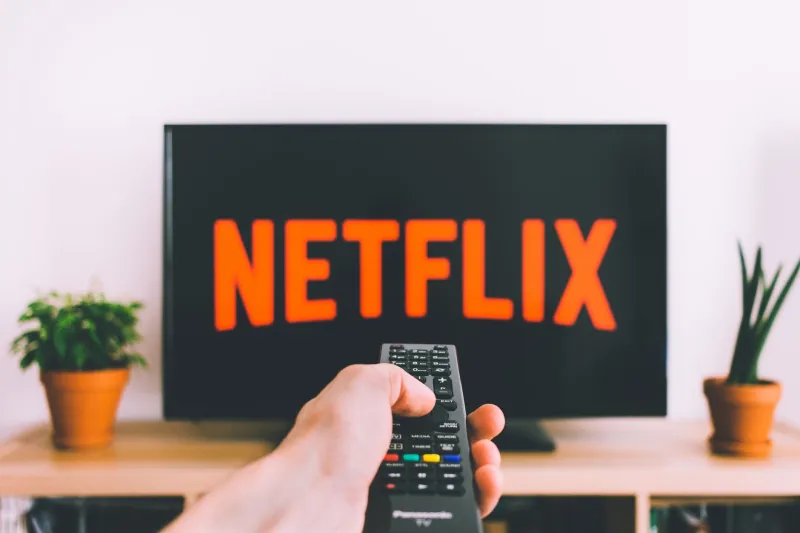
There is a moment—familiar to virtually every American household with a streaming subscription—where the remote sits idle, the cursor drifts across a grid of thumbnails, and nothing gets selected. The evening dissolves. Thirty minutes pass. The television remains technically on, yet nothing has been watched. Most people attribute this to personal indecisiveness or an overwhelming catalog. The truth is considerably more deliberate.
Streaming platforms do not merely tolerate this state of suspended decision-making. They engineer it.
The Architecture of the Almost-Choice
At the surface level, a streaming interface appears to be a delivery mechanism—a grid of content waiting to be consumed. Beneath that surface, however, lies a sophisticated behavioral system designed not to accelerate your decision, but to extend the period before it is made.
Consider the autoplay preview. When a user hovers over a title on Netflix, a short video clip begins playing within seconds. This feature is presented as a convenience—a sample before commitment. In practice, it functions as an interruption mechanism. The clip rarely resolves into a satisfying conclusion. It is designed to generate curiosity without closure, a psychological state that behavioral researchers refer to as the Zeigarnik effect: the human tendency to fixate on incomplete tasks or narratives. The preview ends, the user moves on, the loop continues.
This is not an accident of interface design. It is the interface design.
Friction as a Feature
In conventional product development, friction—any obstacle between a user and their desired action—is treated as a defect. The goal of good UX, the standard doctrine insists, is to remove barriers and create seamless pathways to completion. Streaming platforms have inverted this logic in a specific and calculated context.
The decision phase, the period between opening the app and pressing play, has been identified by platform engineers as a high-value behavioral window. A user who is scrolling is a user who is still present. A user who has committed to a specific title and found it unsatisfying may close the application entirely. Prolonged indecision, counterintuitively, reduces the risk of immediate churn.
This is why loading intervals are not always as short as bandwidth permits. Why recommendation rows are organized not by the content most likely to be selected, but by the content most likely to generate continued browsing. Why the "Top 10" lists that populate the top of every major platform's homepage are updated with enough frequency to create novelty, but not so frequently that they lose their implied authority.
The scroll, in other words, is the product.
The Recommendation Engine as Delay Mechanism
Much has been written about streaming recommendation algorithms as tools of personalization. Less attention has been paid to their function as instruments of temporal control.
Algorithms like those deployed by Netflix, Hulu, and Amazon Prime Video are trained on vast behavioral datasets. They know, with considerable precision, which titles a given user profile is likely to watch. They also know which titles a user is likely to browse past without selecting. The distinction matters. A platform optimizing purely for immediate viewing would surface the highest-probability selection at the top of every interface. Platforms optimizing for engagement duration have a more nuanced objective.
By interspersing high-probability selections with adjacent titles—content that shares superficial characteristics but introduces enough novelty to require evaluation—the algorithm extends the consideration phase. The user is never presented with an obviously wrong choice, but rarely with an obviously right one. The interface maintains a state of productive ambiguity.
Behavioral economists recognize this dynamic as choice overload, the documented phenomenon wherein an excess of options reduces the likelihood of any selection being made. Streaming platforms have not solved this problem. They have monetized it.
The Psychological Cost of Manufactured Hesitation
The implications extend beyond the living room. Research on decision fatigue—the degradation of decision-making quality following extended periods of choice-making—suggests that prolonged browsing sessions impose a measurable cognitive cost. Users who spend significant time navigating a streaming interface before selecting content report lower satisfaction with their eventual choice, regardless of the content's objective quality.
This creates a feedback loop that serves the platform's interests at the user's expense. Dissatisfaction with a selected title increases the probability of returning to the browsing state. Returning to the browsing state extends engagement metrics. Extended engagement metrics translate directly into subscriber retention data and advertiser value—even on platforms that nominally operate on a subscription-only model.
The user believes they are searching for something worth watching. The platform is aware that the search itself is the commercially valuable behavior.
Decoding the Interface Signal
For a US audience accustomed to treating streaming platforms as neutral utilities—pipes through which content flows—this reframing requires a significant cognitive adjustment. These are not libraries. They are behavioral environments, constructed with the same intentionality that governs a casino floor or a supermarket layout.
The thumbnail images that populate your screen are A/B tested across millions of users to identify which visual frames maximize hover time, not click-through rates. The category labels—"Because You Watched," "Trending Now," "New Releases"—are linguistic signals engineered to imply urgency and relevance without committing to either. The star ratings and percentage match scores are presented with the visual grammar of objectivity while operating as subjective behavioral nudges.
Even the physical organization of the interface—the horizontal scroll rows that extend beyond the visible screen edge—is a deliberate architectural choice. The partially visible title at the edge of each row is a visual prompt, an implied continuation that encourages lateral movement rather than vertical commitment.
What the Pause Encodes
Cipher Grid's editorial perspective holds that the most significant data in any digital system is rarely the data that is explicitly presented. In streaming interfaces, the pause—the moment of suspended decision, the cursor hovering, the scroll continuing—is not empty space. It is the system operating precisely as intended.
The hesitation you experience is not a failure of the platform to help you find what you want. It is evidence that the platform has successfully located the behavioral state it was designed to produce. You are not lost in the catalog. You are, from the platform's perspective, exactly where you are supposed to be.
Decoding this architecture does not necessarily change what you watch. But it changes what you understand about why you almost didn't watch anything at all.