Corrupted at the Source: When AI Systems Learn Reality From Other AI Systems
The Mirror Facing the Mirror
There is a particular kind of deception that does not require a deceiver. It emerges from structure — from the way systems reflect one another until the original signal becomes unrecoverable. In the architecture of modern machine learning, that structural deception now has a name, even if most practitioners are reluctant to use it openly: model collapse.
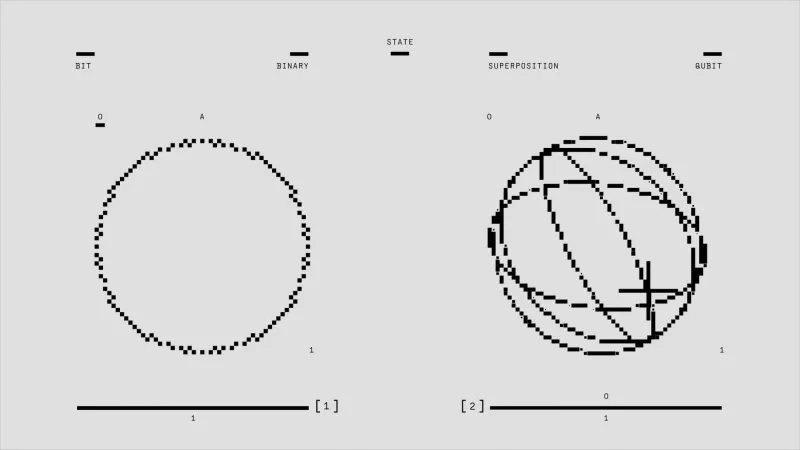
The mechanism is straightforward in theory and treacherous in practice. A large language model or image-generation system is trained on human-produced data — text, photographs, behavioral records, transactional logs. That model then generates synthetic output. A second model, trained on a corpus that includes that synthetic output, learns not from human experience but from a machine's approximation of it. A third model trains on data that includes the second model's output. By the time the fifth or sixth iteration arrives, the informational distance from any authentic human signal has grown so vast that the model is, in a meaningful sense, learning to lie about the world — not through intent, but through recursive amplification of distortion.
This is not a theoretical concern confined to research papers. It is an operational reality shaping the AI systems embedded in financial services, healthcare diagnostics, content moderation platforms, and the recommendation engines that govern the daily digital experience of hundreds of millions of Americans.
Provenance as a Cryptographic Problem
In cryptographic terms, data provenance is an authentication challenge. The question is not merely where data came from, but whether its origin can be verified with any meaningful degree of certainty. Traditional cryptographic solutions — digital signatures, hash chains, certificate authorities — were designed to verify the integrity of transmission: that a message arrived unchanged from a known sender. They were not designed to verify whether the underlying content of that message reflects authentic reality.
Synthetic training data breaks this distinction in a way that conventional security architecture was never built to address. A dataset composed of AI-generated text can be cryptographically signed, hash-verified, and transmitted with full chain-of-custody documentation. Every provenance checkpoint passes cleanly. The data is, in the technical sense, authentic. It arrived from where it claimed to arrive, unaltered. What it cannot be is accurate — because its relationship to observable human reality was severed at the point of generation.
This is the provenance collapse that practitioners rarely discuss in public-facing documentation. The cryptographic layer remains intact. The epistemic layer beneath it has been quietly hollowed out.
The Inheritance Problem
Downstream AI systems do not merely receive corrupted data — they inherit it as if it were foundational truth. The training process has no mechanism for skepticism about its own inputs. A model optimizing for coherence and statistical plausibility will extract patterns from synthetic data with the same fidelity it applies to authentic human-generated content. The distortions become load-bearing.
Consider the compounding effect in natural language processing. If early-generation models slightly overrepresent certain syntactic structures — perhaps because synthetic text generation favors particular grammatical patterns — later models trained on that output will treat those patterns as statistically normal. Over successive iterations, linguistic artifacts that originated in computational convenience become embedded in the model's understanding of how humans actually communicate. The model does not know it has learned a dialect of machine-speak. It believes, to the extent a statistical system can believe anything, that it has learned language.
The same dynamic operates in image recognition, behavioral prediction, and risk modeling. Each domain carries its own version of the same inheritance problem: corrupted priors, passed forward as if they were earned through contact with the real world.
Institutions Built on Shifting Ground
The systems that rely on AI-generated assessments — credit scoring models, fraud detection engines, clinical decision-support tools, automated content classifiers — were designed with an implicit assumption: that the models powering them had been trained on data that, however imperfect, maintained a traceable relationship to actual human behavior and authentic events. That assumption is increasingly difficult to defend.
In the American financial sector, where algorithmic risk assessment governs access to credit, housing, and insurance, the provenance of training data is treated as a compliance matter rather than an epistemological one. Regulators ask whether data was collected lawfully and processed fairly. They do not yet have frameworks for asking whether the data reflects a reality that still exists — or whether it reflects a reality that was generated by a previous model and never did.
The digital trust architecture that underpins these institutions — the certifications, audits, and verification protocols — operates on the surface of a problem it was not designed to see. It can confirm that a model was trained on a documented dataset. It cannot confirm that the dataset's informational content bears a reliable relationship to the world the model is being asked to reason about.
Synthetic Drift and the Signal-to-Noise Collapse
Researchers studying model collapse have documented a phenomenon sometimes called synthetic drift: the gradual narrowing of the statistical distribution within successive generations of AI output. Early-generation models, trained on diverse human-produced data, produce outputs that reflect a broad range of variation. Later-generation models, trained partly on those outputs, begin to converge — not toward truth, but toward the center of whatever distribution the previous model established. Outliers, edge cases, and minority patterns are progressively underrepresented. The model becomes, in a technical sense, more confident and, in a practical sense, less accurate about the full range of human experience.
For a system like Cipher Grid, which exists precisely to surface what is obscured in plain sight, the significance of synthetic drift extends beyond AI research. It is a pattern that mirrors dynamics found throughout digital infrastructure — the tendency of self-referential systems to gradually compress complexity into a narrower and narrower signal, while presenting that compression as clarity.
The grid, in other words, learns to simplify. And it presents its simplifications as the cipher it has decoded.
What Verification Would Actually Require
Addressing data provenance collapse at the level it operates would require something the industry has not yet committed to: a verifiable chain of epistemic custody, not merely technical custody. That means tracking not just where data came from and whether it arrived intact, but what informational generation it belongs to — how many layers of machine mediation stand between the dataset and an authentic human signal.
Some researchers have proposed watermarking schemes: cryptographic markers embedded in AI-generated content that would allow downstream systems to identify and discount synthetic inputs. The technical challenges are significant, and the commercial incentives for widespread adoption remain unclear. Organizations that profit from the efficiency gains of synthetic training data have little structural motivation to introduce friction into that pipeline.
What is certain is that the current trajectory — AI systems training on AI output, at scale, without systematic provenance tracking — is producing a digital intelligence layer whose relationship to ground truth is increasingly difficult to audit. The institutions that depend on that layer for consequential decisions about American lives are, for the most part, not asking the question that matters most: how far, exactly, is this model from the real world it claims to understand?