The Glitch Gospel: Why Brands Are Deliberately Breaking Their Own Signals
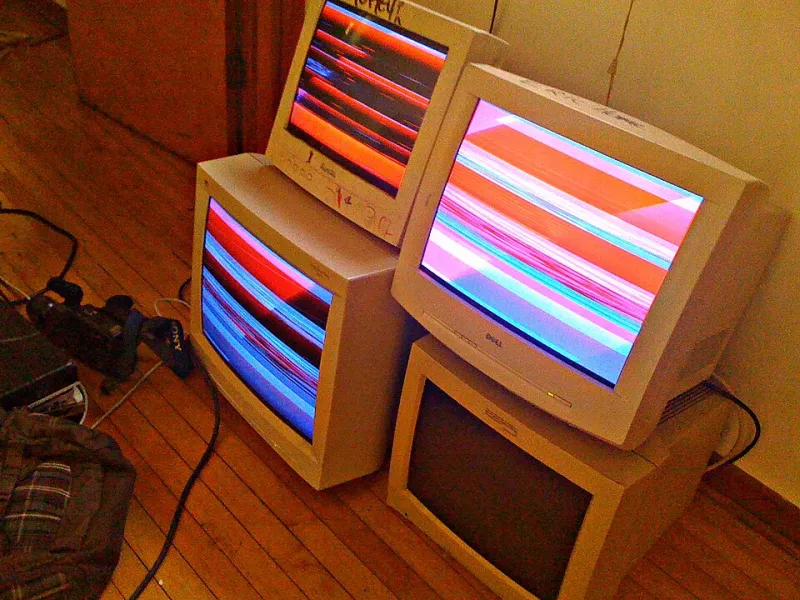
Photo: jonCates, CC BY-SA 4.0, via Wikimedia Commons
There is a particular kind of attention that a corrupted signal commands. A video that stutters, a logo that fragments into pixel scatter, an audio track that dissolves into static at precisely the wrong moment—these are the stimuli that the human perceptual system flags as anomalous, demanding investigation. Brands have noticed. And increasingly, the most culturally fluent among them are manufacturing these anomalies with considerable care.
The deliberate aesthetic of malfunction has moved from the margins of experimental digital art into the mainstream vocabulary of commercial communication. To the uninitiated, a glitched advertisement might appear to be a production failure. To its intended audience, it reads as a carefully encoded signal—one that communicates cultural positioning, self-awareness, and a specific kind of credibility that no amount of polished post-production can purchase.
Decoding this language requires understanding not just what these brands are doing, but why the grammar of imperfection has become so legible, and so persuasive, to contemporary American consumers.
The Semiotics of Deliberate Failure
Digital artifacts—compression noise, frame drops, color channel misalignment, audio clipping—are the byproducts of systems under stress. In the early decades of consumer digital media, encountering these signals meant something had gone wrong. A corrupted download, a failing hard drive, a weak broadcast signal. The artifact was a symptom of inadequacy.
That original meaning has not disappeared. It has been deliberately appropriated. When a brand introduces these same artifacts into controlled, high-production content, it is performing a kind of semiotic judo—borrowing the authenticity that attaches to unplanned imperfection and transferring it to a manufactured context. The visual noise says: this was not perfected into meaninglessness.
This mechanism operates on a principle well-documented in consumer psychology: excessive polish can trigger skepticism. When every element of a communication has been optimized, the audience registers the optimization itself, and it reads as artifice. The glitch interrupts that recognition. It introduces a moment of apparent vulnerability that signals the absence of concealment—even when, of course, the glitch is the most carefully concealed element of all.
Who Is Fluent in This Language
The effectiveness of glitch aesthetics is not universal. It operates within a specific cultural register, and brands that deploy it are making a calculated bet about audience fluency.
The cohort most reliably equipped to decode deliberate imperfection skews younger, digitally native, and culturally engaged with the aesthetics of internet subculture. For this audience, the glitch carries a dense web of associations: early internet culture, lo-fi music production, the visual language of vaporwave and its descendant aesthetics, the authentic documentation style of phone cameras and social media. These are not associations with failure. They are associations with a specific kind of realness—one defined precisely by its contrast with corporate sheen.
Brands targeting this demographic have understood, with increasing sophistication, that the signal must be pitched at the right frequency. A glitch deployed too broadly reads as a gimmick. Deployed with precision—in the right medium, at the right moment, with the right surrounding context—it functions as a recognition signal, the visual equivalent of a cultural handshake.
Case Studies in Controlled Corruption
The practice manifests across multiple media formats, each with its own dialect.
In video advertising, deliberate frame corruption and color channel splitting—the visual effect of a VHS tape being played on failing hardware—have appeared in campaigns for apparel brands, music streaming services, and independent food and beverage labels. The production investment required to make these effects appear genuinely accidental is not inconsiderable. Achieving the aesthetic of a broken signal without it simply looking like a broken signal requires precisely the kind of technical sophistication the aesthetic is designed to disavow.
In audio branding, the deliberate introduction of vinyl crackle, tape hiss, and lo-fi compression into otherwise high-fidelity brand content has become a recognizable signature in certain market segments. Independent coffee brands, streetwear labels, and direct-to-consumer lifestyle companies have adopted this sonic palette as a marker of artisanal credibility. The noise is the message: we are not a corporation; we are a sensibility.
Perhaps most interesting is the deployment of apparent digital errors in static brand identity. Logos designed with intentional pixel corruption, typography that appears to be loading incorrectly, website interfaces that simulate lag or partial rendering—these are aesthetic choices that communicate a fluency with digital infrastructure so deep that the brand can afford to break it.
The Paradox at the Center
There is an obvious tension at the heart of this practice that deserves direct examination. Authenticity, by most meaningful definitions, cannot be manufactured. The glitch that communicates realness is produced by teams of designers, approved by brand strategists, and A/B tested against cleaner alternatives. Its rawness is a product.
This paradox is not lost on the audiences most fluent in the language. Within certain communities, the awareness that glitch aesthetics have been corporately adopted has generated its own counter-signal—a kind of meta-irony in which the deliberate deployment of imperfection is itself recognized as a form of calculated polish. The more mainstream the aesthetic becomes, the more its credibility erodes among the early adopters who established its meaning.
Brands navigating this dynamic face an accelerating cycle of adoption and obsolescence. The glitch that reads as authentic today may read as a cynical appropriation within a commercial cycle or two. Staying ahead of that curve requires not just aesthetic fluency but genuine cultural intelligence—an understanding of where the signal still carries its original charge and where it has been spent.
Reading the Noise
For audiences equipped to decode it, the deliberate artifact is among the most information-dense signals in contemporary brand communication. It tells you what cultural communities the brand is claiming membership in, what level of audience sophistication it assumes, and how it positions itself against the ambient perfection of algorithmic content feeds.
None of that information is transmitted explicitly. It is embedded in the noise itself—in the specific frequency of the static, the particular character of the glitch, the precise moment at which the signal appears to break down. Like all sophisticated encoding, it rewards those who know how to look.
At Cipher Grid, we find this phenomenon instructive not merely as a marketing observation but as a broader illustration of how meaning migrates through digital culture. The tools of apparent failure have become the vocabulary of deliberate communication. The noise has become the narrative. And the audience willing to decode it is, perhaps, the most valuable audience of all.